

The short answer
To import electronics into India you need, depending on the product, BIS registration (CRS for electronics and IT, ISI/FMCS for other scheduled goods), WPC ETA for any Wi-Fi, Bluetooth or radio function, TEC MTCTE for telecom and network equipment, BEE star labelling for energy-rated appliances, and EPR registration with CPCB for e-waste. Foreign manufacturers must also appoint an Authorised Indian Representative (AIR). Most products need two or three of these, and customs will not clear a shipment that is missing one.
Key takeaways
- India regulates electronics through five separate authorities - BIS, WPC, TEC, BEE and CPCB - and each one issues its own approval.
- A single product often needs more than one: a Wi-Fi router, for example, needs BIS CRS, WPC ETA, TEC MTCTE and EPR.
- Approvals are granted to the manufacturer, not the importer. Foreign factories must appoint an Authorised Indian Representative (AIR).
- Testing comes first; the registrations that depend on the test reports follow. Getting the order wrong is the most common cause of delay.
- Processing times are set by the regulators, not by consultants - anyone promising a fixed number of days is guessing.
Why India requires product approvals
India is the world’s second-largest consumer electronics market, and since 2012 the government has steadily expanded mandatory certification to protect buyers from unsafe, energy-wasteful and unrecyclable products. The rules are enforced at two points: at customs, where a shipment without valid registration is held or returned, and in the market, where uncertified stock can be seized from retailers.
For a manufacturer or importer, that turns compliance from a formality into a gate. No approval, no entry. The good news is that the system is predictable once you know which authorities apply to your product - and that is what this guide lays out.
The five regulators, at a glance
| Regulator | Controls | You receive | Typical products |
|---|---|---|---|
| BIS - Bureau of Indian Standards | Product safety and quality against Indian Standards | CRS registration (R-number) or ISI licence | Laptops, power banks, LED products, appliances, batteries, CCTV |
| WPC - Wireless Planning & Coordination Wing | Radio spectrum use | Equipment Type Approval (ETA) | Anything with Wi-Fi, Bluetooth, RFID, NFC, Zigbee |
| TEC - Telecom Engineering Centre | Telecom network compatibility and security | MTCTE certificate | Routers, switches, modems, IoT gateways |
| BEE - Bureau of Energy Efficiency | Energy consumption | Star label registration | Air conditioners, refrigerators, TVs, fans, lighting |
| CPCB - Central Pollution Control Board | End-of-life e-waste responsibility | EPR registration | Almost all electrical and electronic equipment |
Each authority has its own portal, its own documentation and its own reviewers. They do not talk to each other. That is why a product can be fully BIS-registered and still be stopped at customs for a missing WPC approval.
Which approvals does your product need?
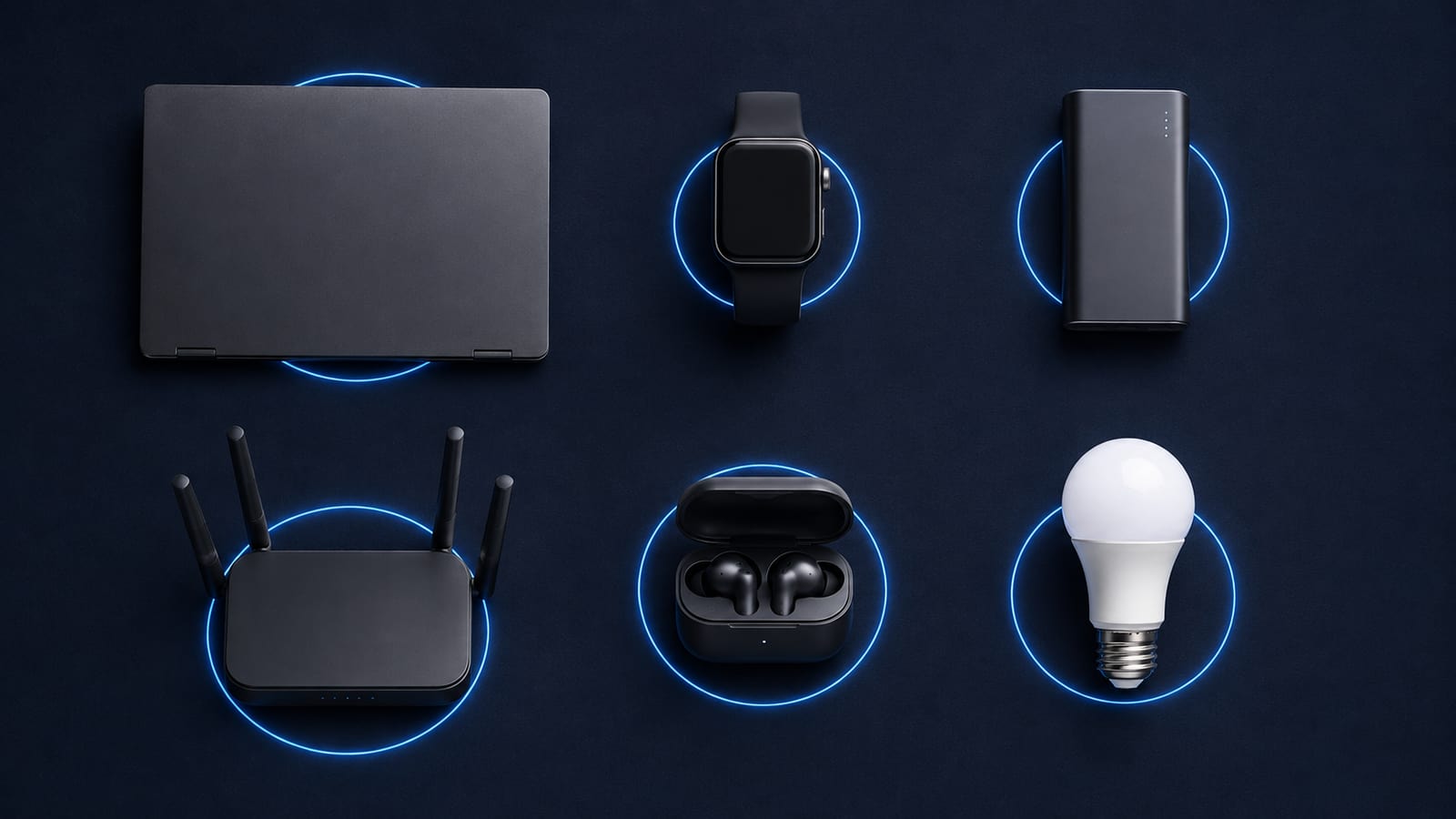
The honest answer is “it depends on the product” - but the patterns are consistent. Here is how the most common imported electronics map to the regulators:
| Product | BIS | WPC ETA | TEC MTCTE | BEE | EPR |
|---|---|---|---|---|---|
| Laptop / tablet | CRS | Yes | - | - | Yes |
| Smartwatch / wearable | CRS | Yes | - | - | Yes |
| Power bank | CRS | - | - | - | Yes |
| Wi-Fi router / gateway | CRS | Yes | Yes | - | Yes |
| Bluetooth speaker / earbuds | CRS | Yes | - | - | Yes |
| LED luminaire / driver | CRS | - | - | Some | Yes |
| CCTV camera | Essential Req. | If wireless | - | - | Yes |
| Refrigerator / washing machine | ISI (QCO) | - | - | Yes | Yes |
| Air conditioner | ISI (QCO) | If smart | - | Yes | Yes |
| Solar PV module / inverter | CRS | - | - | - | Yes |
Two points stand out. First, EPR applies to nearly everything - it is the approval importers most often forget. Second, wireless is the multiplier: the moment a product has a radio, WPC joins the list, and if it connects to a telecom network, so does TEC.
If your product is not in the table, the fastest way to find out is our free Compliance Navigator, which maps 24 product categories to their approvals in one click - and a consultant confirms the exact scope for your model at no charge.
The right order to apply
Because several approvals depend on the same evidence, sequence matters. This order avoids repeating work:

- 01
Confirm scope first
Identify every applicable regulator and the exact Indian Standard or Essential Requirement for your model. Errors here cascade through everything that follows.
- 02
Test once, use everywhere
Product safety testing at a BIS-recognised laboratory produces the reports that BIS registration stands on. EMC/EMI testing and RF test reports serve both WPC and TEC. Plan the test matrix so one round of samples covers every regulator.
- 03
File BIS
CRS registration for electronics and IT (a registration number, marked with the Standard Mark), or the ISI licence route - via FMCS for foreign factories - where the product is under a Quality Control Order rather than CRS.
- 04
- 05
Register EPR
EPR registration with CPCB under the E-Waste (Management) Rules, so your import volumes carry their recycling obligation.
- 06
Label correctly
BEE star labelling where applicable, plus the BIS Standard Mark, WPC and EPR markings on product and packaging.
Skipping step one is where most expensive mistakes begin: a product tested against the wrong standard has to be tested again.
Foreign manufacturers: the AIR requirement
This is the rule that surprises overseas companies most. BIS, WPC and TEC approvals are granted to the manufacturer, not to the importer or trader. A foreign factory cannot hold an Indian registration directly - it must appoint an Authorised Indian Representative (AIR): an Indian legal entity that files the application, holds the registration, and remains answerable to the regulator for compliance in India.
- You do not need to open an Indian office or subsidiary to get certified.
- Your AIR signs the application, receives regulator queries, and carries legal responsibility - choose one that answers those queries the same day.
- One AIR can hold registrations for multiple products and brands from the same factory.
- If you change AIR later, registrations must be transferred, so the choice matters.
Shasta Solution acts as AIR for more than 100 foreign manufacturers. The full picture of how remote representation works is on our page for global manufacturers.
The documents you will need
Requirements differ by regulator, but the core set is consistent enough to prepare in advance:
- Manufacturer registration and factory address proof (with an AIR agreement for foreign factories)
- Product specification, user manual and circuit or block diagrams
- Bill of materials with critical components and their certifications
- Test reports from recognised laboratories, in the format each regulator expects
- Brand and trademark ownership or authorisation
- For ISI routes: factory quality-control records and in-house test equipment lists
- For WPC: RF test report and technical datasheet showing frequency bands and power
- For EPR: import volume projections and details of your recycling arrangements
Each regulator reads these differently. A test report that satisfies BIS may be rejected by TEC for missing a clause, which is why preparing the file “the way each regulator reads it” is most of the skill in this work.
Costs and timelines - the honest version
Costs have four components: government fees per application and model, laboratory testing fees per standard, AIR or consultancy fees, and - for ISI licences - ongoing marking fees. Testing is usually the largest line. Because it depends on the number of models, variants and applicable standards, any figure quoted before scoping is a guess. A written assessment with a real breakdown is free from us, within one business day.
Timelines are controlled by the regulators. Application queues, query cycles and lab schedules all sit outside any consultant’s control, and a consultant who promises a fixed number of days is either guessing or hiding a caveat. What genuinely shortens the journey is what you can control: complete documentation the first time, a test plan without gaps, and every regulator query answered the day it arrives. Done well, that removes weeks of avoidable back-and-forth.
Five mistakes that cost importers the most
- 01
Assuming BIS is the whole story. It is one of up to five approvals. Check WPC, TEC, BEE and EPR before the first sample ships.
- 02
Testing before scoping. Reports against the wrong standard, or missing a variant, mean paying for the lab twice.
- 03
Ignoring EPR until customs asks. EPR registration is required for import; retrofitting it delays clearance.
- 04
Choosing an AIR on price alone. Your AIR is your legal face to the regulator; slow query responses stall every application they hold.
- 05
Letting registrations lapse. CRS registrations and ISI licences have validity periods and renewal windows. A lapsed registration stops shipments as surely as a missing one.
FAQ · Importing electronics into India
Frequently asked questions
The six questions importers ask us first - answered straight.
Talk to a Shasta consultant
Tell us what you make. We’ll map every approval it needs.
Regulators, standards, documents and costs - in writing, free, within one business day.
Shasta Solution LLP has guided products through Indian market approvals since 2010 - 4,500+ certifications, 2,300+ clients, one accountable partner across BIS, WPC, TEC, BEE and EPR.